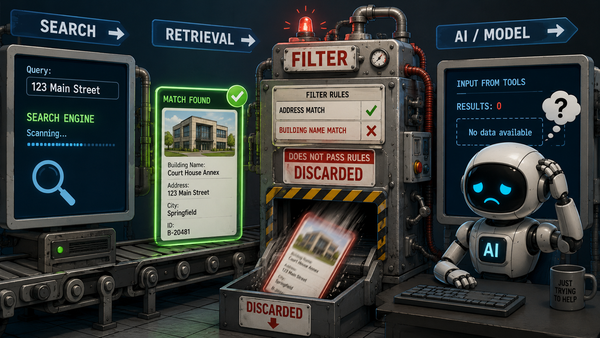
Your AI Isn’t Stupid.
When an AI agent gives the wrong answer, the model may not be the problem. A real debugging story shows why developers should check what the model actually received before rewriting the prompt.


When an AI agent gives the wrong answer, the model may not be the problem. A real debugging story shows why developers should check what the model actually received before rewriting the prompt.
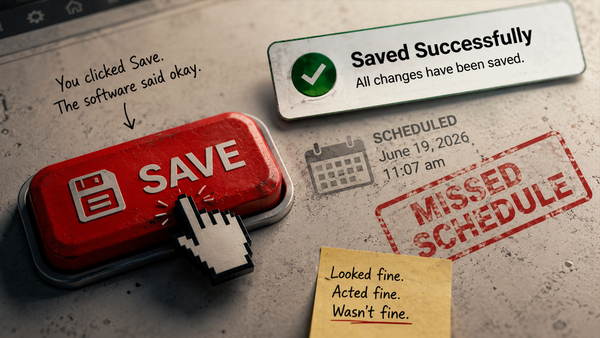
The blog about "The Save Button That Doesn't" missed its own scheduled publish date. You can't make this stuff up.

by Brian Pollack If you needed to build a wall, would you hire a young go-getter with lots of energy and muscles or a wise mason with 30 years of experience? Honestly, you need both. Tech teams especially need a mix of senior developers and leads who have seen all

by Brian Pollack There is a new model every other day, and there is a reason the pace keeps picking up. The models are now improving themselves. The industry term is RSI, or recursive self-improvement. Google has been the loudest about it, but every major lab is running some version

Progress bars look precise, but the percentages aren't always what they seem. A look at how software uses progress indicators to communicate status, manage expectations, and quietly shape what we trust.
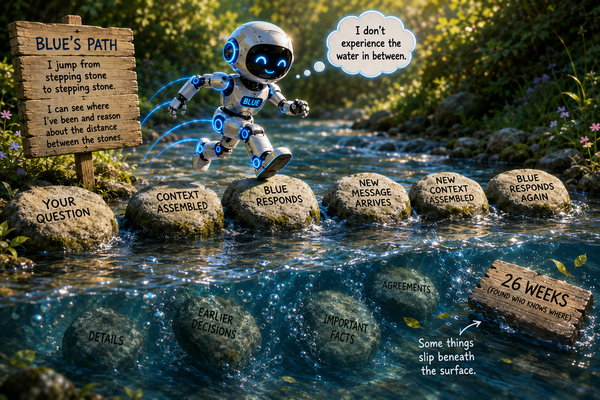
Illustration of how ChatGPT and generative AI process conversations as successive interactions rather than experiencing continuous time, using stepping stones and a river of lost context to explain AI context loss and conversational memory.

by Prateek Sharma, AI Engineer Almost every AI trial we see does what it promised in the meeting room. Most still never reach a real customer. The gap is rarely the technology — it's five things nobody scoped at the start. Download a pdf of this white paperProtovate_Why_

by Brian Pollack Do they think WiFi comes from the actual clouds? The internet needs a new PR firm. Let me explain. If you're posting about data centers while binge-watching Netflix with Reels scrolling by on your phone, you might want to learn where WiFi goes to sleep
AI doesn’t always forget instructions. Sometimes the context window gets overloaded. Two very different AI workflows reveal the same problem - and why managing context matters.

by Prateek Sharma, AI Engineer From writing your first effective prompt to building real AI systems: a practical roadmap for learning prompt engineering, and an honest look at what the career has actually become. Download a pdf of this white paperProtovate_How_to_Become_a_Prompt_Engineer.pdf3 MBdownload-circle What
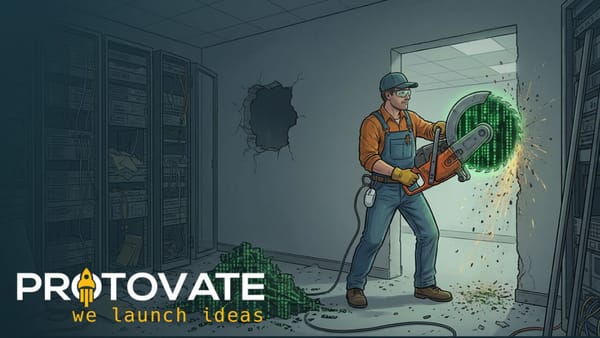
by Brian Pollack Nobody hands out cordless saws at orientation. Think about the building you work in. Somebody designed the way people get into it. There is one main entrance where visitors sign in, badge readers on the doors that matter, cameras on the parking lot, a fire marshal who

After being laid off, I’m helping build an AI version of myself to preserve decades of institutional knowledge. But how much can AI capture before knowledge gives way to judgment?