
WiFi Doesn’t Come From the Clouds: The Internet’s Data Center Problem

by Brian Pollack
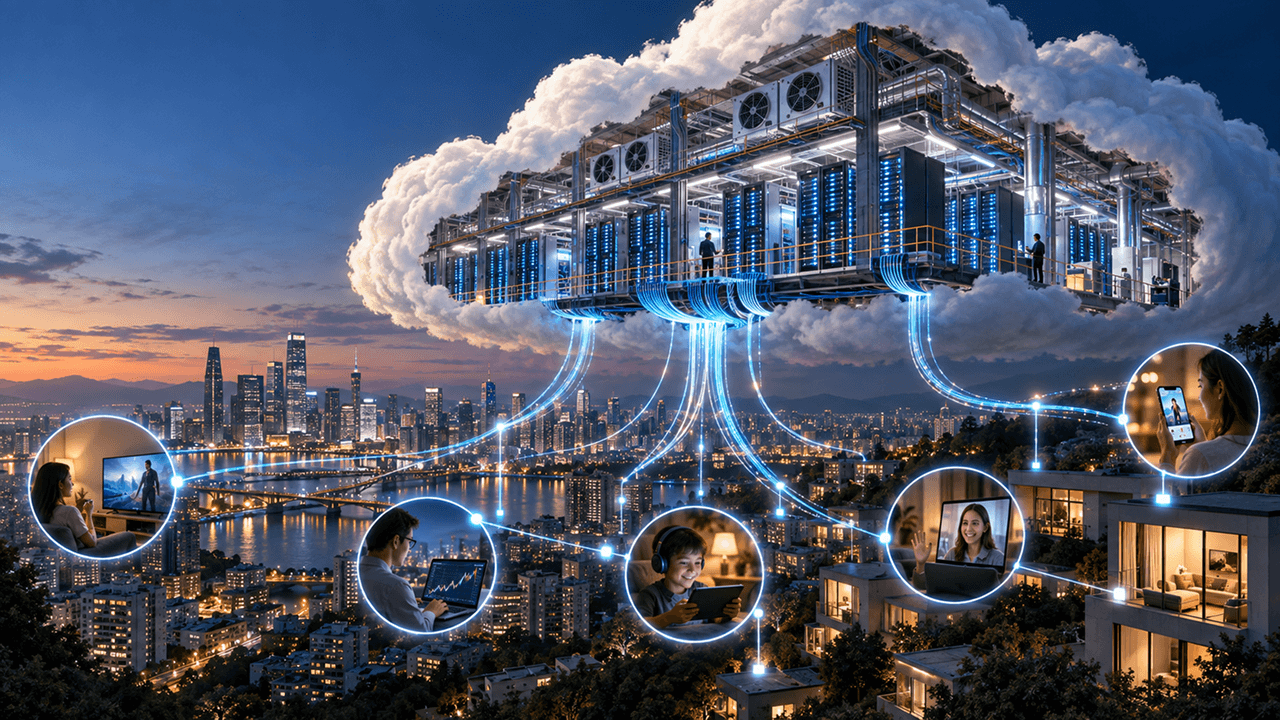
Do they think WiFi comes from the actual clouds? The internet needs a new PR firm. Let me explain.
If you're posting about data centers while binge-watching Netflix with Reels scrolling by on your phone, you might want to learn where WiFi goes to sleep at night. If your kids are streaming YouTube on the TV while playing Roblox on an iPad and FaceTiming Grandma, maybe learn how that works before you fight to block your digital babysitters. If your husband is getting spawn-camped by a 12-year-old and complaining about ping times, that's data centers too. Your father-in-law refreshing his stocks for 48 minutes in the bathroom, and your teenage son streaming The Hub at full volume for the third time today? Also data centers.
Everyone should form their own opinion. When I started in data centers, the bandwidth we moved in an entire year was a rounding error next to what the internet moves today, and most people have no idea how any of this works. Those of us in tech should do a better job explaining it, the bad and the good.
Video is about 38% of all internet traffic. Social media adds another 18%. Nobody built this for AI. We built the internet so you could watch things.
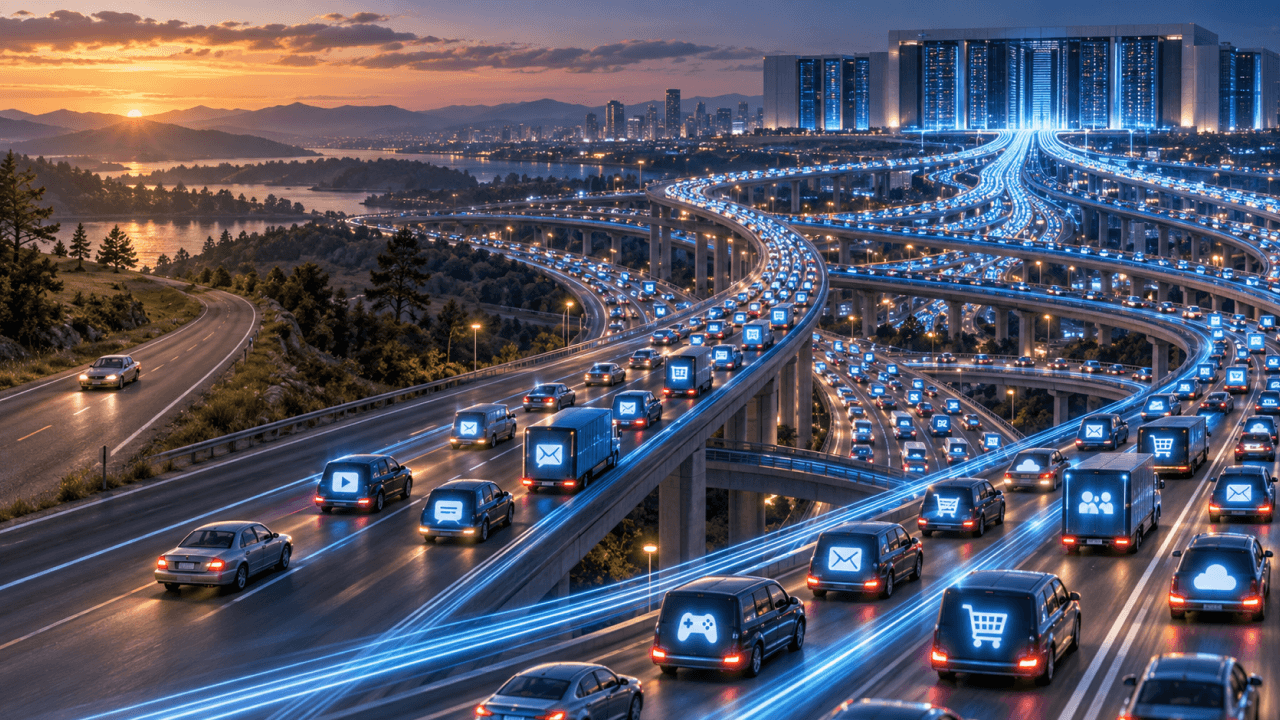
In 2000, the entire internet carried about 75 petabytes a month. In 2025 it carried roughly 8.8 zettabytes for the year. That is a 970,000% increase in 25 years, and almost none of it is AI. Imagine the roads today if we had added 10,000 cars for every car on the road in 2000. We actually added about one car for every three, and traffic is terrible.
That growth keeps us entertained, keeps supply chains moving, keeps food on the table, makes our debit cards work, and lets our families know what is going on in our lives. Asking to stop building data centers is like asking to stop building roads while everyone keeps buying cars.
Streaming is also a smaller part of the energy problem than people think. Your TV uses about 14 times more power than the data center that sends it the movie. The same people who don't want data centers are the ones making Netflix ask "Are you still watching?" while 95% of that power burns in their own living room.
Today, every data center in America uses less electricity than home air conditioning. How many people are willing to turn that thermostat up?
Here is where I'll be straight with you. The trend is real. Berkeley Lab projects US data centers will use 6.7% to 12% of all American electricity by 2028, and the IEA has worldwide use more than doubling by 2030. That deserves a serious argument about where we build them, who pays for the power lines, and what happens to the local water.
That argument is worth having. It just isn't happening, because the internet needs better PR. Most people have no idea a cloud is a building full of computers. They think a cloud is a cloud, because WiFi comes from the sky.
I'm a real human. I typed this with real fingers, but I did stop and do actual research.
Interested? Schedule a call with me. I’m always happy to talk about what AI is actually capable of.
Originally published on Protovate.AI
Protovate builds practical AI-powered software for complex, real-world environments. Led by Brian Pollack and a global team with more than 30 years of experience, Protovate helps organizations innovate responsibly, improve efficiency, and turn emerging technology into solutions that deliver measurable impact.
Over the decades, the Protovate team has worked with organizations including NASA, Johnson & Johnson, Microsoft, Walmart, Covidien, Singtel, LG, Yahoo, and Lowe’s.
About the Author

Share article


