
It’s 2026, Not 2016
Technical interviews still test experienced developers on memory and syntax, even as real-world development increasingly depends on judgment, problem-solving, and intelligent use of modern tools. Prateek Sharma asks whether it’s time for the interview process to catch up.

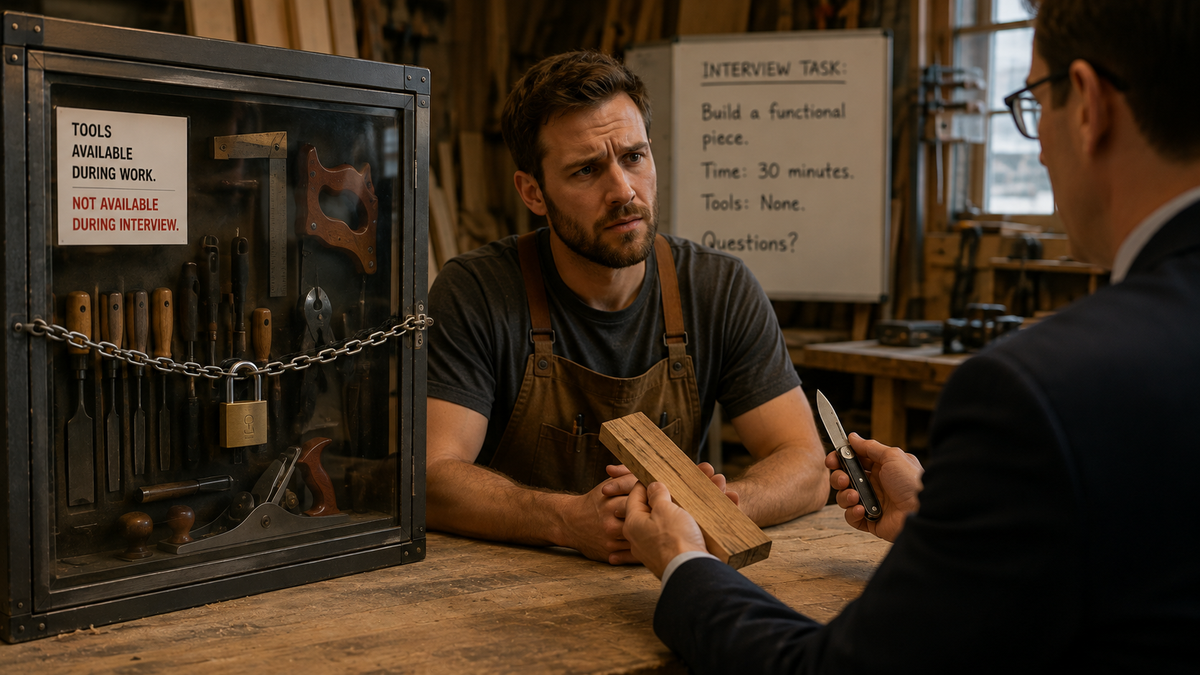
The Tools Have Changed. The Work Has Changed. Why Haven’t Technical Interviews?
by Prateek Sharma
I was talking to a friend today who recently went through a technical interview, and honestly, his experience made me think about what developers of our generation are going through right now.
He has 14+ years of experience, and during the interview he was asked to solve a basic data-structure problem in just five minutes — from memory, without using any tools or AI.
And this is where things get strange.
We belong to a generation that learned development before AI became part of our everyday workflow. We spent years writing code ourselves, searching Stack Overflow, reading documentation, debugging for hours and learning from our mistakes.
Then AI changed the way we build software.
Today, experienced developers use AI as a tool — not as a replacement for knowledge. We understand the problem, decide the architecture, break it into smaller pieces, review what AI generates, question it when something doesn’t look right, debug it and ultimately take responsibility for what goes into production.
But somehow, many interviews are still designed around proving that you can remember syntax and function names under pressure.
Forget one small syntax detail, and suddenly years of experience seem to mean nothing.
It’s 2026, not 2016.
The way we develop software has changed
dramatically. But the way we evaluate developers hasn’t changed nearly enough.
If I were interviewing an experienced developer, I would give them a real-world problem and let them use the tools they normally use.
Then I’d ask:
* Why did you choose this approach?
* What alternatives did you consider?
* How would you debug it?
* What could go wrong in production?
* How would you improve it?
* And most importantly — do you actually understand and own the solution you are shipping?
Because remembering code from memory isn’t the most important skill anymore.
Understanding problems. Making good technical decisions. Reviewing solutions. Using AI intelligently. Debugging. And taking ownership of what you build — that’s the real skill.
My friend’s experience is unfortunately not unique.
And that’s what worries me.
There are thousands of experienced developers out there struggling to find the right opportunities, not because they suddenly forgot how to build software, but because the hiring process hasn’t caught up with the way software development has evolved.
I really hope this changes.
For every experienced developer sitting in that interview chair today — and for everyone who will sit there tomorrow.
Share article


