
Fully Staffed Is Not Fully Covered
Nerds aren’t interchangeable. Why even strong IT teams sometimes need specialized expertise in accessibility, security, performance, and other high-risk areas.


by Brian Pollack
Nerds are not interchangeable. IT work is dozens of narrow skills wearing the same badge. Last weekend I moved my daughter into an apartment a galaxy away, and that apartment makes the point better than I can.
Quick disclaimer: I do plenty of trade work myself, so none of what follows is a knock on maintenance people. It is hard work and I know it.
𝐓𝐡𝐞 𝐡𝐚𝐧𝐝𝐲𝐦𝐚𝐧 𝐬𝐩𝐞𝐜𝐢𝐚𝐥
The complex pushed her move-in date twice to get the place ready. When we got there, so many things were patched up or fixed with a handyman special. We joked that they must have gotten a discount on white paint, given how many things had been sprayed down like a fire hydrant on a summer day.

𝐖𝐡𝐚𝐭 𝐜𝐡𝐚𝐧𝐠𝐞𝐬 𝐰𝐡𝐞𝐧 𝐲𝐨𝐮 𝐦𝐨𝐯𝐞 𝐬𝐨𝐦𝐞𝐨𝐧𝐞 𝐭𝐨 𝐩𝐚𝐲𝐫𝐨𝐥𝐥
Anyone who flips houses, runs multi-unit complexes, or handles regular repairs on buildings goes through the same journey. First they research and hire the best companies. Over time they learn which ones they like working with, and they start calling those companies more and more. Eventually they have a rolodex (bonus word for fellow super adults like me) of people they use over and over. Then one of those people upgrades the pitch: "Hey, I can handle that drywall repair while I'm at it." It doesn't take long for the flipper to realize that paying professional rates on every call isn't a good investment when they could hire their favorite guy or girl full time for a lot less. That changes the financial dynamic. As long as they can keep that person busy, they don't have to think about the cost of each individual repair.
Here's the catch. It also changes the mindset. The flipper is no longer looking for the best person for the job at hand. Quality quietly stops being the objective and volume of work takes its place. Maximize how much the worker can get through, because "I'm already paying for them anyway." That's how you end up with someone duct-taping over a fist-sized hole in the wall and hosing it down, along with every fixture, window, and outlet nearby, with Sherwin-Williams SuperPaint. I'm sure that hardworking guy could do better work on quarter-round, but his workload and his training don't leave room for it, so he hit the baseboards with 800 16-gauge nails and moved on.

𝐓𝐡𝐞 𝐬𝐚𝐦𝐞 𝐭𝐫𝐚𝐝𝐞, 𝐢𝐧 𝐈𝐓
We have this exact problem in IT, and I have made the trade myself. Vice presidents, directors, and accountants rarely understand the difference between the highly complicated things their IT teams are working on. I work with some amazing developers and technical wizards, and I'm confident I could hand nearly any task to my senior team and it would get done. It might not get done in the best possible way. They might not have the right tools. But they will find a way to mark the problem solved. That's the moment I traded quality for cost and speed without realizing I had made the trade at all.
Give the flipper enough time with that dedicated crew and eventually something critical goes wrong. The cosmetic defects and the low quality work in my daughter's apartment annoyed me, but they didn't create a safety risk. Maybe someone missed the O-ring on the fitting under the sink, and one morning she wakes up to a flooded kitchen. Maybe it was their first time repairing a stair railing and nobody told them it needs a specific kind of lock nut, and the outcome is a lot worse than a wet floor. Those failures sound unlikely, so the flipper justifies the risk against the cost. IT leaders make that same bet every day, and just as quietly.
Nerds are not interchangeable, even when every one of them can technically get the job done. Companies need to balance dedicated staff with on-demand experts.
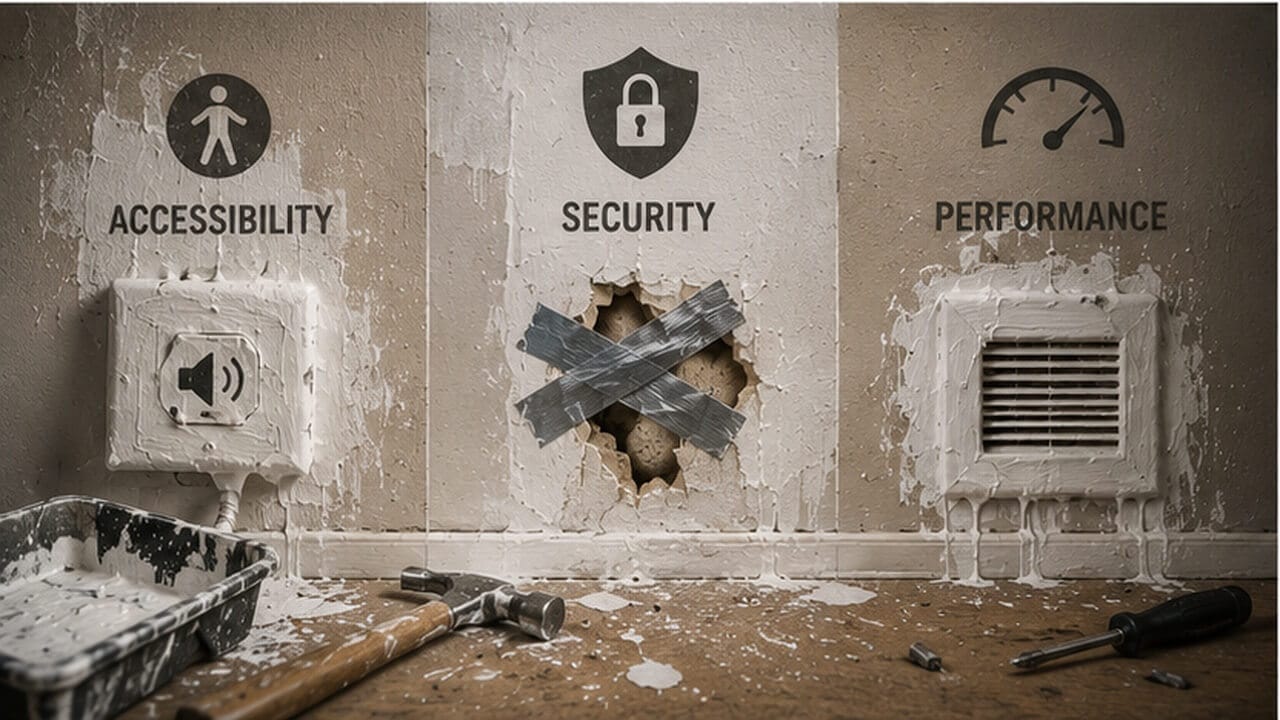
𝐓𝐡𝐫𝐞𝐞 𝐞𝐱𝐚𝐦𝐩𝐥𝐞𝐬 𝐟𝐫𝐨𝐦 𝐞𝐱𝐩𝐞𝐫𝐢𝐞𝐧𝐜𝐞
Accessibility. This is the one that is hardest to explain, so it is where I usually start. Most people, and especially most developers, have never used a screen reader or navigated an application with a switch device. They do their best, and doing their best means treating the accessibility rules as a checklist. That is exactly the same move as spraying white paint over everything. Almost every time I have been called in to look at accessibility, I have found the letter of the rules met and the spirit of them ignored. Companies that actually care whether their software works for people with disabilities need someone who can tell them why it doesn't work today and which fixes would help the most people.
I am constantly surprised by how many companies settle for accessibility theater, where an app passes a technical audit and is still practically unusable. One of my clients, a Fortune 500 with millions of customers, put a mobile app through internal validation and shipped it with decorative icons that were never marked decorative, image alts that named the file instead of describing the image, links that gave a screen reader no idea where they led, and JavaScript events that a switch device could not reach at all. Every box on the checklist was green. Nobody had ever asked a blind person to try the app, and nobody had ordered a single switch input device to test with.
Security. I have no problem fixing things on my car, but I will not work on my brakes. The risk is too high. It is a critical component and I would rather leave it to the experts. There is something to be said for the mechanic who spends every day working on brakes and catches the little things I never would. Securing each part of your systems is the same thing. Someone who spends their working life researching that field is going to do better than a good generalist doing their best, and when a generalist misses here the result isn't a cosmetic defect.
Performance. This is the one that shows up on the invoice. A slow database gets a bigger instance. Then a bigger one. Then a caching layer that nobody fully understands. Months later somebody finally reads the query plan and adds an index, and the fix was sitting there for free the whole time. Companies routinely spend more money over a longer period and get worse results trying to squeeze performance out of a database or a tool, all without ever talking to someone who knows that tool deeply.
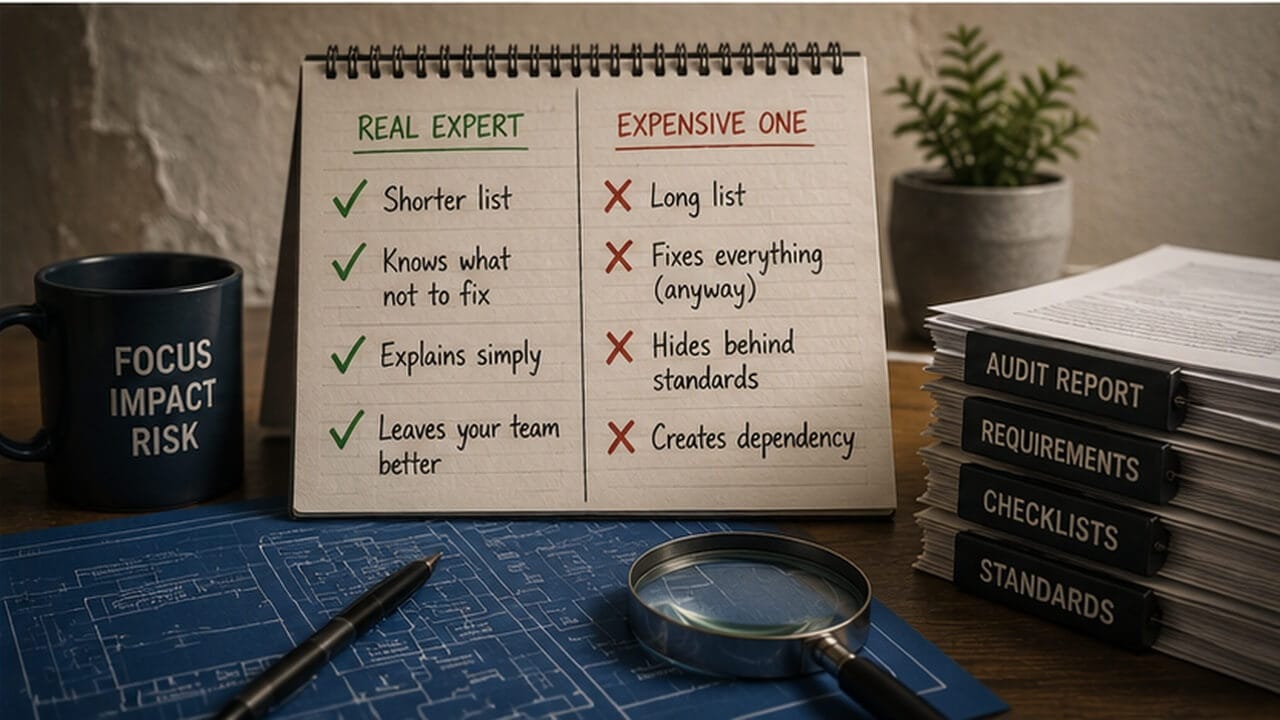
𝐇𝐨𝐰 𝐭𝐨 𝐭𝐞𝐥𝐥 𝐚 𝐫𝐞𝐚𝐥 𝐞𝐱𝐩𝐞𝐫𝐭 𝐟𝐫𝐨𝐦 𝐚𝐧 𝐞𝐱𝐩𝐞𝐧𝐬𝐢𝐯𝐞 𝐨𝐧𝐞
I should be upfront about my bias here. I sell this kind of help for a living, so weigh what I am telling you accordingly. The honest version of this argument also has to admit that plenty of consultants are just the guy with the white paint, billing hourly. Checklist work at expert rates is its own version of the same trap.
So here is what I look for, and what you should hold me to.
A real expert gives you a shorter list than you expected. They will tell you which of your problems is not worth fixing, because they know where the actual risk lives and where it doesn't.
A real expert can explain the problem to the person who signs the check. Anyone who truly understands a narrow field can make it simple for the rest of us. If the only justification they can offer is that some standard requires it, they are reading you a checklist too.
A real expert leaves your team better at the thing than they found it. The goal was never a permanent dependency. The goal is that your people now know what good looks like in that one narrow area.
𝐓𝐡𝐞 𝐚𝐬𝐤
If you are an IT leader, this is the argument you have probably tried to make to finance and lost. Send it to them.
If you work in accounting, or you are the decision maker who signs off on it, approve the request when your IT leadership tells you they need an outside expert on something specific. Even the best teams are only staffed for the most common situations. Being fully staffed and being fully covered are two different things.
And remember, four layers of fresh white paint isn't fooling anyone.
Any IT leaders or devs want to chime in with examples of your own?
Interested? Schedule a call with me. I’m always happy to talk about what AI is actually capable of.
Originally published on Protovate.AI
Protovate builds practical AI-powered software for complex, real-world environments. Led by Brian Pollack and a global team with more than 30 years of experience, Protovate helps organizations innovate responsibly, improve efficiency, and turn emerging technology into solutions that deliver measurable impact.
Over the decades, the Protovate team has worked with organizations including NASA, Johnson & Johnson, Microsoft, Walmart, Covidien, Singtel, LG, Yahoo, and Lowe’s.
About the Author

Share article


